Why Your Wedding DJ Is the Most Important Supplier You’ll Book
(And Why Nobody Talks About It)
Ask any couple what they spent the most time researching before their wedding and you’ll hear the same answers. The photographer. The caterer. The florist. The venue. Pages of Pinterest boards, hours of consultation calls, and weeks of back-and-forth emails — all in service of getting those things exactly right.
And then, almost as an afterthought: “Oh, we should probably sort a DJ.”
It’s one of the most common patterns I see after 30 years doing this. And I understand why it happens — the DJ is easy to deprioritise because music feels like a given. Of course there’ll be music. How hard can it be?
Here’s what I’d gently push back on: your DJ is the one supplier who is actively working throughout your entire evening. Not capturing it. Not serving it. Not decorating it. Running it. And the difference between a great DJ and a mediocre one isn’t just the music — it’s the whole feel of the night.
Music Does Something to People
This sounds obvious but it’s worth sitting with for a moment. Music doesn’t just fill silence. It changes how people feel, how they move, whether they stay on the dance floor or drift back to their seats. It signals what kind of evening this is.
A well-timed track at the right moment can pull sixty people onto a dance floor in thirty seconds. The wrong track, or the right track at the wrong moment, can empty it just as fast. This isn’t magic — it’s reading the room, and it’s a skill that takes years to develop.
A playlist on a speaker doesn’t read the room. It just plays the next song.
What Actually Separates a Great Wedding DJ from Everyone Else
It’s not the equipment (though that matters). It’s not even the music library. It’s the judgment.
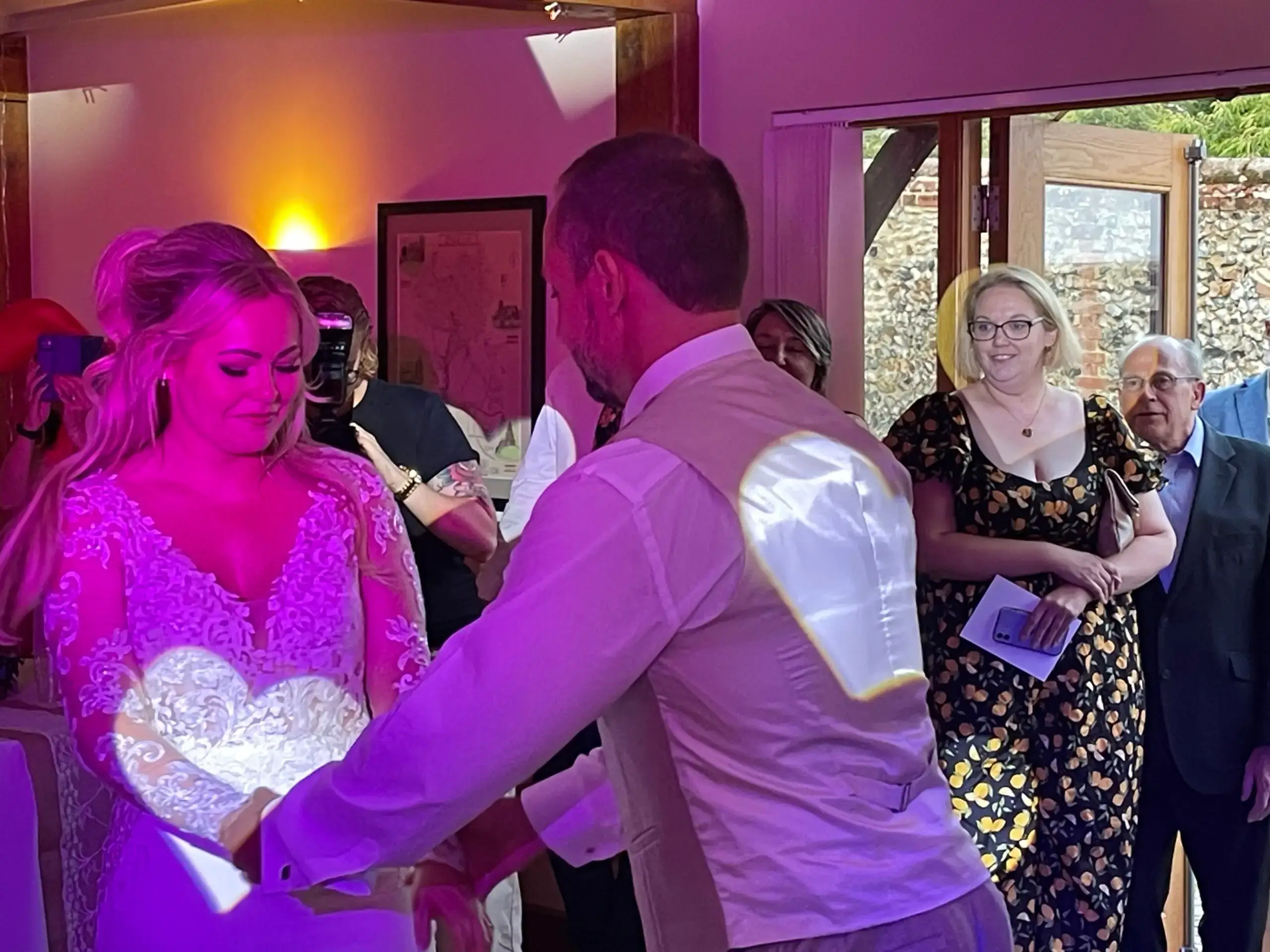
Knowing when to drop the tempo and bring it back. Knowing that the group of aunties near the bar will come alive for something unexpected if you time it right. Knowing that the first dance isn’t just a song — it’s a moment that sets the emotional tone for everything that follows.
A great wedding DJ is also paying attention to timing across the whole day. Are guests still finishing dessert? Is the best man speech running long? Is the venue running five minutes ahead or ten minutes behind? These things affect the music, and the music affects how the evening feels. An experienced DJ absorbs all of this and adjusts without you ever having to ask.
A less experienced one sticks to the plan regardless, because they don’t yet know how to do anything else.
The Questions Most Couples Don’t Think to Ask
When couples do get around to booking a DJ, the conversation usually goes one of two ways. Either they ask about price, or they send over a list of songs they’d like to hear. Both are reasonable starting points, but neither gets at the thing that actually matters.
Here are better questions to ask:
“How do you handle a quiet dance floor?”
This is where experience really shows. Anyone can DJ a packed floor. What happens when the energy dips — do they panic and reach for the YMCA, or do they read the room and bring it back properly?
“How many weddings do you take per week?”
A DJ doing three or four weddings a week is running a volume business. That’s not necessarily bad, but it does mean your wedding is one of many. A DJ who limits their bookings is giving yours their full attention before, during, and after.
“What’s your approach to announcements?”
Some DJs treat the microphone as an invitation to perform. Others understand that announcements should be clear, calm, and unobtrusive. The couples who come back and say the evening ‘just flowed’ usually had a DJ who knew when to speak and when to let the music do the work.
“How do you handle requests on the night?”
Not all requests are created equal. A good DJ knows how to honour the spirit of a request without derailing the dance floor — and how to gently manage the ones that would.
What a Packed Dance Floor Actually Requires
Every couple wants a packed dance floor. It’s one of the most common things I’m told when couples get in touch. And it’s completely achievable — but it doesn’t happen by accident.
It requires knowing your crowd before the night starts. Not just a list of favourite songs, but understanding the age range, the musical history of the family, which guests are likely to lead and which will follow. A good pre-wedding conversation covers all of this.
It also requires patience. The dance floor doesn’t usually fill in the first ten minutes. There’s a warm-up period, a moment where the energy builds, and then — if you’ve read it right — it tips. Once it tips, the job is to keep it there without forcing it.
Forcing it, incidentally, is what the cheesy routines and crowd participation games are for. They work in the short term because they manufacture participation. But they also tell your guests something about the kind of evening it is — and not always in a good way.

The Thing Nobody Mentions Until After the Wedding
When weddings go really well — when the evening flows, the dance floor stays full, and guests are still talking about it months later — the DJ rarely gets the credit. The couple got lucky with their guests. The venue had a great atmosphere. The night just came together.
When weddings go badly, the DJ is usually the first thing mentioned.
A great DJ is invisible in the best possible sense. You don’t notice them managing the room because it doesn’t feel like it’s being managed. It just feels like a great party.
That’s the job. And it’s worth taking as seriously as everything else you’ve planned.
If you’re in the process of planning your wedding and want to talk through what you’re looking for, I’d love to have a chat. I only take one wedding per week, so if your date is coming up it’s worth checking availability sooner rather than later.
let's talk
I’d love to have a chat about YOUR wedding plans to help make your day flow as effortlessly as possible